The past, present, and future of radiation chemistry in America
The Notre Dame Radiation Laboratory shepherds in the next generation of research with historic expertise
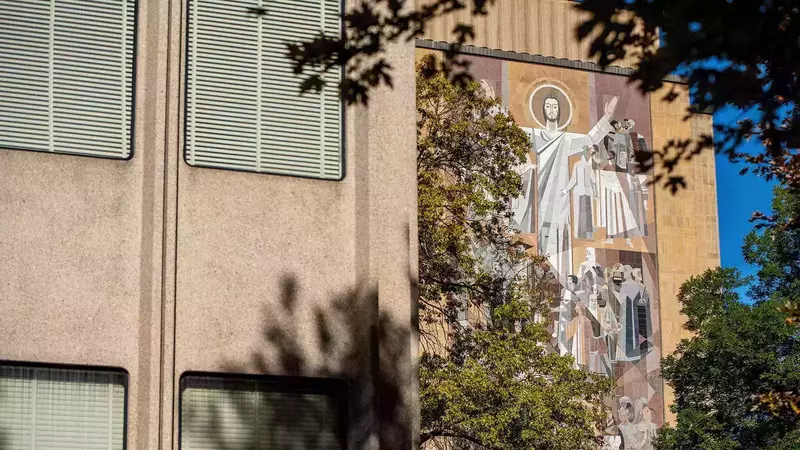
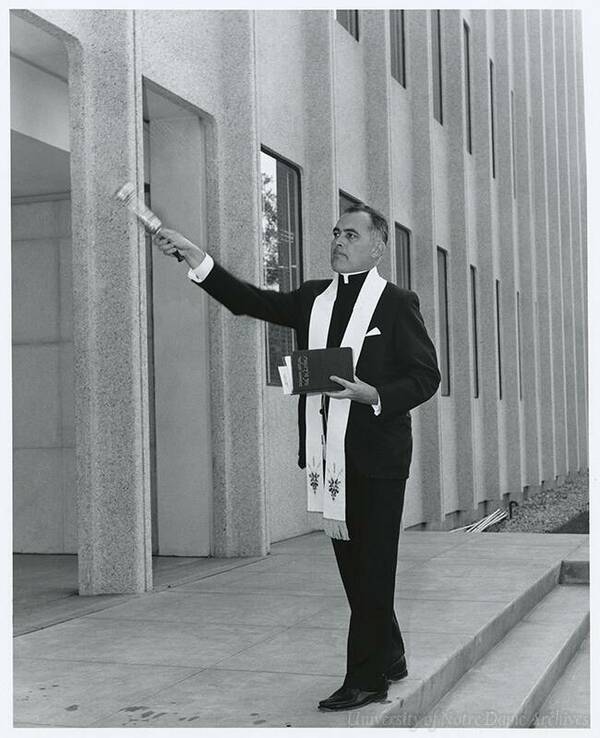
When the Radiation Research Building was blessed by Father Theodore Hesburgh during its dedication on September 1, 1963, then-Chairman of the Atomic Energy Commission (AEC) Glenn Seaborg heralded the new laboratory as the nation’s foremost center for the production of scientists in the highly specialized field.
More than six decades later, the Radiation Laboratory at the University of Notre Dame (Rad Lab) continues to play a leading role within the national research landscape.
Sharing origins with the project that would become Notre Dame’s Institute for Structure and Nuclear Astrophysics (ISNAP) in the 1930s, the Rad Lab and its faculty have served as trusted resources for data collection, storage, and exchange since the University center was conceived as the Radiation Chemistry Project in 1947. Since then, the group has welcomed visiting faculty from all over the world, as well as trained scientists who now work across the nation and around the globe.
“It is said, ‘if you build it, they will come,’ and we’ve built that facility here,” said Jay LaVerne, research professor at the Radiation Laboratory and concurrent research professor in the Department of Physics & Astronomy. “We regularly get calls from researchers at other American universities, from the national laboratories, and from across the world.”
Equipment, expertise, and educational setting
Central to the Rad Lab’s notability is the colocation of multiple, specialized instruments for radiation experiments.
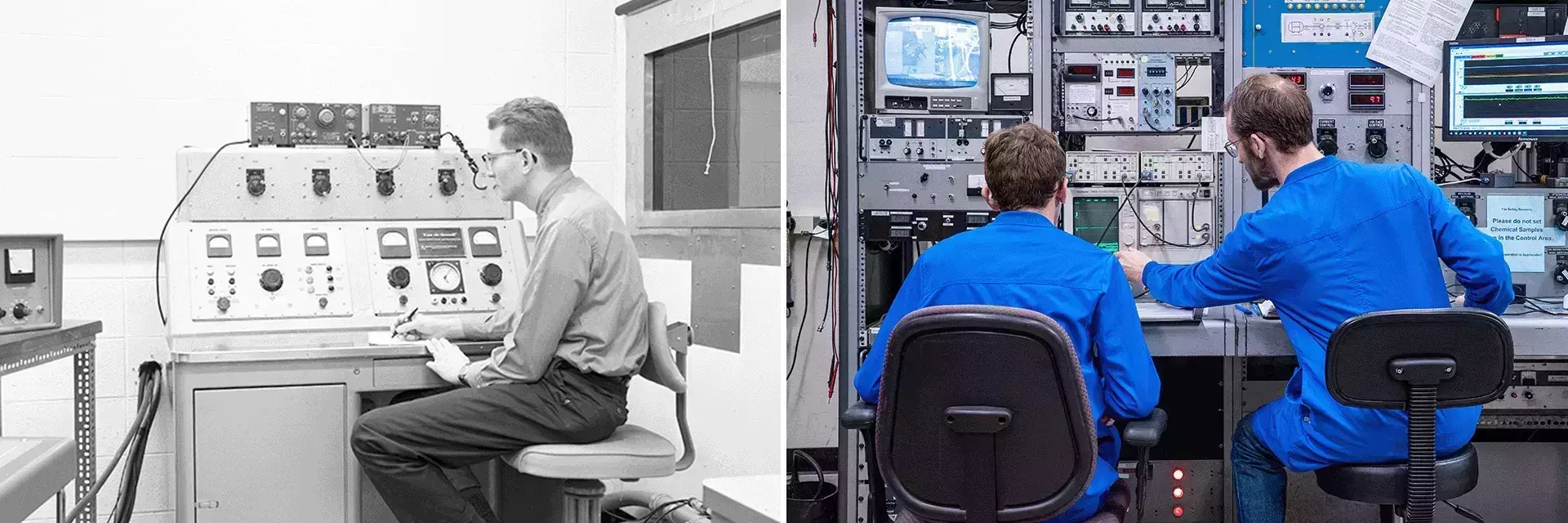
Three electron accelerators, including one eight-million electronvolt linear accelerator and two van de Graaff electrostatic pulse generators, allow researchers to bombard materials and media of interest with high-energy electrons that deposit energy and displace electrons within the sample. This process of ionization generates short-lived, free radical species, which researchers can then characterize using various spectroscopic techniques. Researchers also have the ability to conduct radiation studies under high temperature and pressure, similar to the conditions present in a nuclear reactor.

The lab’s specialized spectrometers, many of which were designed and built in-house, enable the characterization of short-lived radiolysis products and electron transfer reactions on time scales as short as one trillionth of a second.
“We've got many pieces of equipment that you could find elsewhere, but the fact that they are co-located here is a big advantage,” said Ian Carmichael, faculty director of the Rad Lab and professor in the Department of Chemistry and Biochemistry. “Even then, there’s only one or two other instruments of each kind in the world, which makes a facility like ours very rare.”
But beyond the simple presence of these specialized instruments, faculty at the Rad Lab have the ability and the expertise to make modifications to meet specific experimental needs.
“Because we’re a small facility, we’re also agile,” explained LaVerne. “We have the in-house knowledge to adapt our equipment and even build new configurations to meet the needs of particular experiments, both for our own and for scientists across the country who are looking to work with us.”
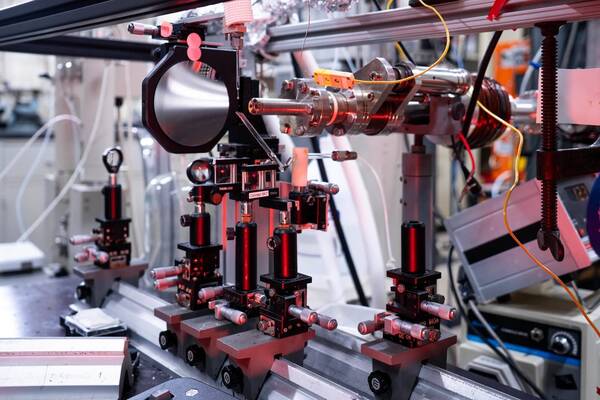
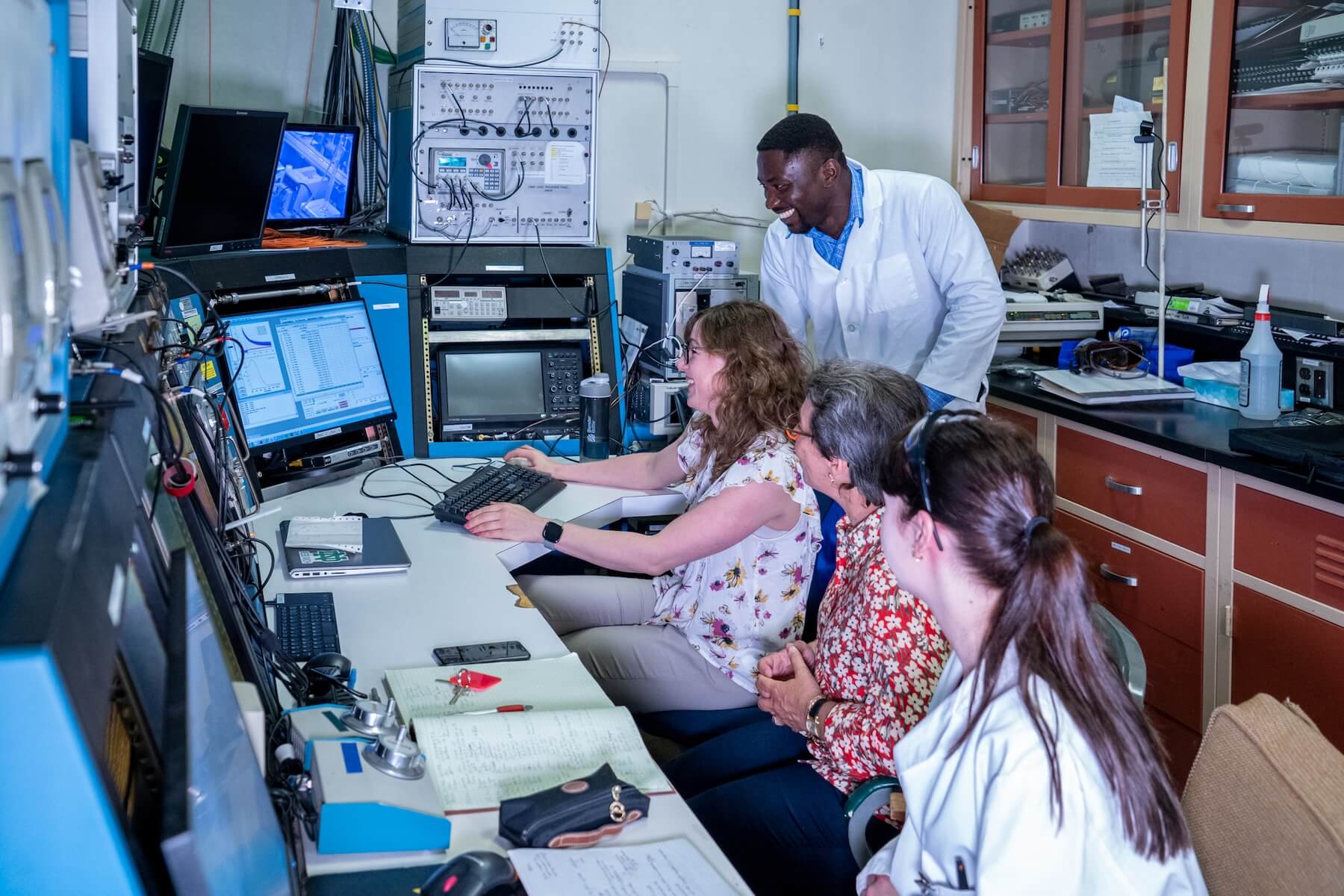
In some cases, this entails developing one-of-a-kind configurations. Ireneusz Janik, associate research professor, upgraded the lab’s time-resolved resonance Raman spectroscopy capabilities—a technique originally developed in the 1980s to study the vibrational “fingerprints” of very short-lived chemical species. Coupled with one of the lab’s Van de Graaff electron accelerators, the system first generates reactive intermediates by a brief pulse of radiation, then probes them with a finely tuned laser. In real time, the scattering of the laser by each species reveals the details of their bonding and structure.
In redesigning the optical layout and improving how samples are handled, Janik increased the instrument’s efficiency by three orders of magnitude. These major improvements enable the study of rare, precious, or difficult-to-prepare samples, and have expanded the range of chemical systems accessible to examination by time-resolved vibrational spectroscopy.
“We’re the only place in the country with this resonance Raman capability, coupled with an accelerator,” said Aliaksandra Lisouskaya, associate research professor. “The fact that we can generate short-lived species and at the same time characterize them at such high resolution is unique.”

“What harm and good this radiation does, and why”
The Radiation Chemistry Project, the Rad Lab’s precursor, set out to “study the general effects of high energy radiation which are produced in the processes of radioactive decay in all types of substances,” according to a September 1949 release from the University’s Department of Public Information.
“It is the aim of the Notre Dame project to determine what harm and what good this radiation does, and why it does harm and good,” the press release continued. “Such scientific material is fundamental to the development of atomic power, and has applications in many other fields.”
The new project, supported by the AEC, was a natural post-war evolution of the University’s contributions to the nation during World War II via the Manhattan Project. Milton Burton, founding director of the Radiation Chemistry Project, was the chief of radiation chemistry in the Metallurgical Laboratory at the University of Chicago when he was commissioned by the government to explore the chemical effects of ionizing radiation. The most suitable machine in the region for these studies was located in the University of Notre Dame’s Physics Department.
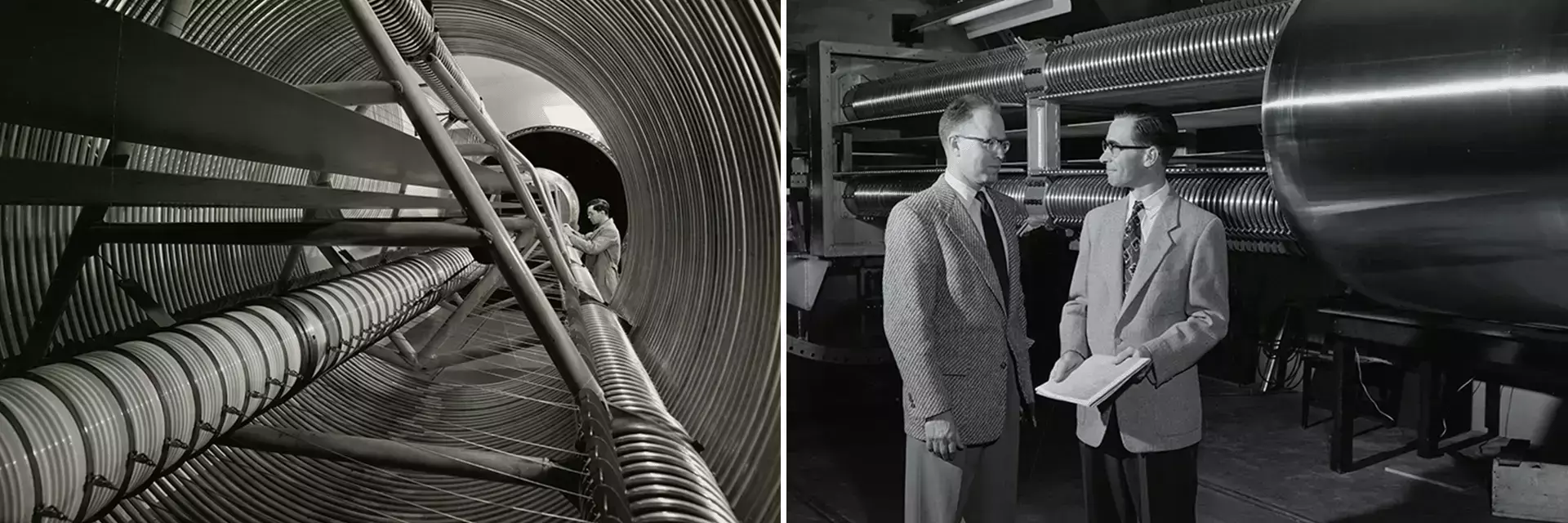
Prior to the war, Notre Dame was already an emerging center for nuclear and radiation science, having built one of the country’s first electron accelerators in 1936. The University’s second accelerator, a two-million electron volt Van de Graff generator completed in 1942, became the center of the Manhattan Project’s study of radiation effects on matter under Burton’s supervision. After the war, Burton joined the faculty of Notre Dame’s Department of Chemistry, directing his efforts towards the peaceful uses of nuclear science.

While much more is known now than during the first half of the twentieth century—in part thanks to the work of research groups like the Rad Lab over the past eight decades—the study of what radiation does and why it does it remains important, especially in service to national security and strengthening the country’s competitive advantage in global scientific and technological advancements.
“What we do here is we collect the data,” explained LaVerne. “The engineers then figure out what they need to use and how they need to use it. But without the data, without the fundamental data, they’re flying blind.”
Such data is critical for nuclear engineers at laboratories and in industry developing nuclear reactors. Many faculty at the Rad Lab investigate the basic chemistry that occurs when high-temperature water—the standard reactor coolant—is subjected to the radiation emitted by the nuclear reaction occurring. The resulting radiation exposure accelerates the corrosion of reactor structures as they interact with the irradiated coolant.
Seeking solutions to the shortcomings of high temperature water as a coolant, Dave Bartels, senior scientist and concurrent professor in the Department of Chemistry and Biochemistry, has studied the temperature effects on water radiolysis in reactors for more than three decades. Bartels examines radiolysis at low temperatures all the way up to supercritical, while Lisouskaya investigates how the addition of certain metal ions —released from corrosion products into the coolant—may influence the redox chemistry of the coolant water.
Recently, scientists and engineers have turned to molten salts as a potential coolant for new reactors. Researchers at the Rad Lab can simulate the high temperature and pressure of nuclear reactors in their own facilities while they strike samples of salts with radiation. The data collected contributes to the ongoing work of the Molten Salts in Extreme Environments out of the Department of Energy’s (DOE) Energy Frontier Research Center (EFRC), a major, multi-institution consortium spanning universities and national laboratories, which will inform the development of next-generation nuclear reactors.
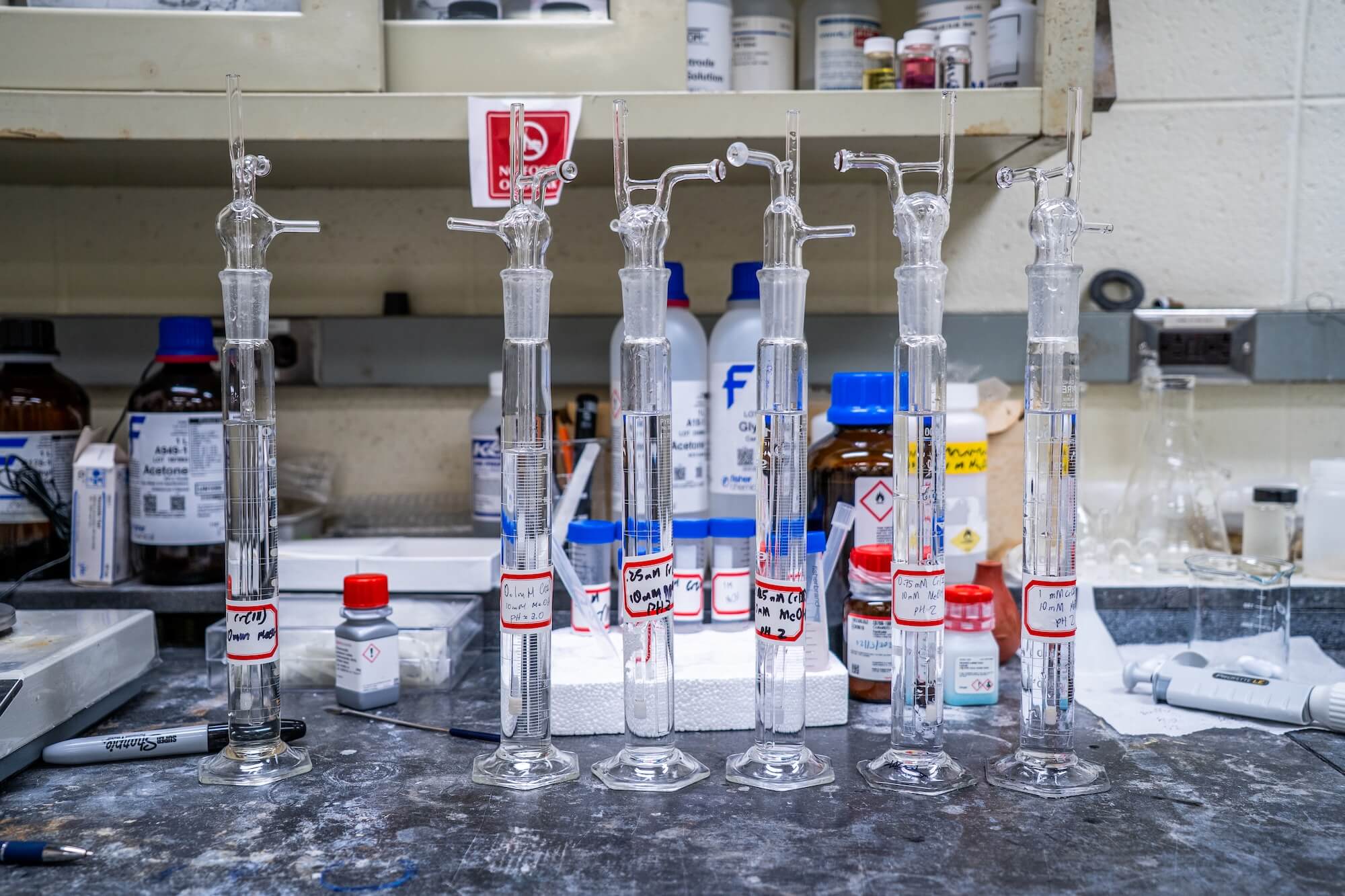
Beyond the reactor, radiation is still a concern in mixtures of spent fuel. While the majority of the components in spent fuel mixtures are weakly radioactive, even the presence of a small amount of radioactive material can induce decay processes that yield dangerous products or corrode the walls of the waste container. Lisouskaya and Janik are exploring the effectiveness of using organic ligands to complex and stabilize actinide elements within the fuel mixture, with the ultimate aim of safely separating unspent fuel from the rest of the mixture for reprocessing.
The safe separation of nuclear waste has an immediate and pressing application: the management of legacy waste remaining from the Manhattan Project. Notre Dame researchers currently consult on the clean-up of the Hanford site, a major DOE project concerned with the treatment and immobilization of millions of gallons of radioactive and chemical waste currently stored in underground tanks in southeastern Washington. LaVerne contributes to this effort as deputy director of the Ion Dynamics in Radioactive Environments and Materials (IDREAM) EFRC, and in collaboration with Amy Hixon, an associate professor in the Department of Civil and Environmental Engineering and Earth Sciences.
Hixon and Kirstin Sockwell, assistant research professor in the Department of Civil and Environmental Engineering and Earth Sciences, collaborate with LaVerne and Lisouskaya to study the effects of radiation on actinide-bearing compounds and solutions. The partnership, which combines the Rad Lab’s expertise in radiation chemistry with the handling and analytical capabilities of the Notre Dame Actinide Research Facility (NDARF), is the only academic and facility cooperative of its kind in the nation.
“We know very little about the actinide elements compared to the rest of the periodic table,” said Hixon. “Studying the radiation chemistry of the actinide elements is important for national security and the development of new nuclear technologies.”
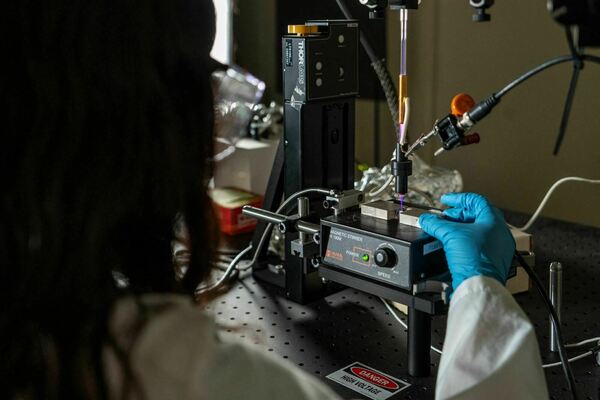
While a large portion of the lab’s portfolio focuses on basic radiation chemistry, other projects span biomedical applications and solar photochemistry.
Sylwia Ptasinska, professor in the Department of Physics & Astronomy, studies the effect of radiation on biomolecules, including DNA. She is exploring cold plasma as a novel, selective radiation therapy for cancer. LaVerne contributes to dosimetry studies, measuring the amount of radiation deposited in tissue to inform the computer models used in proton therapy, another cutting-edge cancer treatment, and other radiation therapies.
Prashant Kamat, the Rev. John A. Zahm, C.S.C., Professor of Science in the Department of Chemistry and Biochemistry, studies the conversion of light energy into electricity or chemicals using light-harvesting materials. He maps electron transfer across the surface of semiconductor nano materials and resolves the complexity of excited state energy and charge transfer processes. Ptasinka’s work in this area probes the surface reactions at semiconductor interfaces, which further aid in developing new light energy conversion systems.
“Ultimately, with the very fundamental things that we can do here, we can help society,” LaVerne said.

Educating the next generation of American scientists
The fundamental research conducted at the Rad Lab also fulfills the fundamental mission of the University: to be a “powerful means for doing good in this country” by educating students across the disciplines. Undergraduate and graduate students who train at the Rad Lab benefit from access to the world-class facilities co-located at the lab, as well as the opportunity to collaborate on the data collection that is central to the work of the lab itself.
“All of these techniques, especially electron paramagnetic resonance spectroscopy and pulse radiolysis, are not widely available, but they’re really important to the national labs for the development of new technologies," said Sockwell, who is also concurrent faculty in the Rad Lab. “Having students learn them is really important for their career prospects, especially if they envision a career as a research scientist.”

Such experiences are already highly sought after by the national laboratories, and a new actinide chemistry facility within the Radiation Research building will provide students an opportunity for valuable cross-training.
“The national labs really want students who are experts in one area, but are also comfortable with the broad range of techniques and materials that exist in related fields,” Hixon said. “They want somebody who can say, ‘I know how to handle these radioactive materials, but also I know radiation chemistry.’”
Indeed, the placement of Notre Dame graduates at national labs across the country is a testament to a legacy that goes beyond the experiments completed, the outcomes modeled, and the facilities designed: service to country has always been a core part of the University’s mission. In developing the talent of young scientists, the Rad Lab ensures that a new generation of experts is prepared to tackle the nation's nuclear and radiological challenges.
“This work doesn’t happen without people who are passionate, capable, and trained to do it,” Carmichael said. “And, many decades on, we’re still the leading American center for training the next generation of radiation researchers.”
Research at the Notre Dame Radiation Laboratory is funded by the Office of Science in the United States Department of Energy. Some projects are also supported by supplemental funding. Currently these include Plasma-induced electrochemistry (AOR), Radiolytic dissolution of ceramics (DOE-NEUP), In situ characterization of transient radioactive compounds (DOE-NEUP), Interfacial dynamics in radioactive environments (DOE-EFRC), Actinide center for excellence (NNSA), Molten salts in extreme environments (DOE-EFRC), Radiolysis in solvent extractions (DOE-NEUP), and Radiation effects on space volatiles (NASA).
Contact:
Erin Fennessy / Writing Program Manager
Notre Dame Research / University of Notre Dame
efenness@nd.edu / +1 574-631-8183
research.nd.edu / @UNDResearch / linkedin.com/company/undresearch
About Notre Dame Research:
The University of Notre Dame is a private research and teaching university inspired by its Catholic mission. Located in South Bend, Indiana, its researchers are advancing human understanding through research, scholarship, education, and creative endeavor in order to be a repository for knowledge and a powerful means for doing good in the world. For more information, please visit NDR's website or NDR's LinkedIn.
Archival images appear courtesy of the University of Notre Dame Archives.
Photos by Angelic Rose Hubert.