On the Road

Blockchain in America 2025: Architects of Trust at the Intersection of Technology, Policy, and Law is a one-day event on Friday, July 25, in the Downes Club in Notre Dame Stadium. The meeting is designed as a launch point into a broader, multi-phase dialogue. It will help shape the agenda for a policy-focused gathering in Washington, DC, to be held in Fall 2025, where key insights from this first workshop will be further developed with lawmakers and agency officials.

Additionally, the series will culminate in a major, hopefully annual, blockchain community convening later in Fall 2025 at Notre Dame, engaging faculty, students, and industry partners to deepen academic and educational engagement in the field.

Learn more about the Blockchain Research Group at Notre Dame.

With a mission to be a powerful means for doing good in the world, researchers at the University of Notre Dame are responding to pressing challenges and opportunities in blockchain, artificial intelligence, and more. 

Learn more about these examples and many more in the highlights below.

Featured Research Areas


  • Preview image for the Data Science video

    Data Science

    Developing meaningful data-driven advances to address societal challenges

    The University of Notre Dame is a significant player in data science research, leveraging the power of artificial intelligence (AI), machine learning, and data science to analyze complex research questions. Dedicated to the ethical use of data, Notre Dame ensures transparency, respectful engagement, and sustainable, actionable results. Collaborations with corporate, government, and community partners enable Notre Dame to develop data-driven solutions that can significantly enhance regional and global economic development, cybersecurity, health outcomes, and sustainable development.

    The Lucy Family Institute for Data and Society acts as a central hub for data-driven research and education, embodying Notre Dame's mission to ethically address society's challenges. Within the institute, researchers benefit from a wide array of facilities, the Applied Analytics and Emerging Technology Lab (AETL), the Data, Inference, Analytics, and Learning Lab (DIAL), the Health Equity Data Lab, and AnalytiXIN. Further supporting Notre Dame's research prowess are campus centers and labs like the Center for Research Computing (CRC), which offers advanced computing infrastructure and modeling capabilities; the Computational Molecular Science and Engineering Laboratory (CoMSEL) which advances health outcomes through machine learning and computational tools; and iNDustry Labs, a local industrial collaboration in the South Bend-Elkhart Region. This blend of academia, industry, and public entities facilitates co-innovation and promotes diverse and inclusive capacity building within the community. Additionally, the University's experiential learning programs are shaping the next generation of leaders for a data-driven future.

    Learn More

    Trusted AI Fact Sheet

    Lucy Family Institute for Data and Society Website

    AnalytiXIN Website

    Center for Research Computing Website

    Computational Molecular Science and Engineering Laboratory Website

    iNDustry Labs Website


  • Preview image for the Technology Ethics video

    Technology Ethics

    Interdisciplinary research into the ethical implications of emerging technologies

    The University of Notre Dame has been a thought leader in the discussion of ethics in technology since the 1960s, combining multi-disciplinary research with an ethical lens to navigate the advancement of emerging technologies. Building upon the establishment of the Philosophic Institute for Artificial Intelligence in 1965, the University now conducts its quest for ethical technology across multiple areas. The Notre Dame-IBM Technology Ethics Lab, backed by IBM's expertise and industry connections, brings ethical analysis directly to the tech development space.

    Moreover, the Lucy Family Institute for Data & Society focuses on the intersection of data and society, aiming to harness data and innovation for the global good. Researchers at Notre Dame focus on key areas such as big data and networks, autonomy and automation, privacy and surveillance, prediction and fairness, and persuasion and manipulation. 

    Learn More

    John J. Reilly Center for Science, Technology, and Values Website

    Notre Dame-IBM Technology Ethics Lab Website

  • Preview image for the Microelectronics video

    Microelectronics

    Supporting microelectronics research and innovation from the lab to fabrication

    Established in 1895, the Department of Electrical Engineering at the University of Notre Dame has distinguished itself in the field of semiconductors and microelectronics, building substantial research programs and robust partnerships with leading institutions such as the Semiconductor Research Corporation, Purdue University, and Indiana University, as well as major tech manufacturers and government agencies like DARPA and NSF.

    The University is home to Notre Dame Nanoscience and Technology (NDnano), fostering interdisciplinary nanoscience and nanotechnology research with its diverse faculty from the College of Engineering and College of Science. Additionally, Notre Dame hosts state-of-the-art core research facilities like the Notre Dame Nanofabrication Facility (NDNF) and the Notre Dame Integrated Imaging Facility (ND-IIF). With a firm commitment to workforce development, Notre Dame also prepares its graduates to innovate in manufacturing and technology, bolstering the microelectronics industry and meeting the societal needs of tomorrow.

    Learn More

    Microelectronics at Notre Dame Fact Sheet

    Notre Dame Nanoscience and Technology Website

    Notre Dame Nanofabrication Facility Website

    Notre Dame Integrated Imaging Facility Website


  • Preview image for the Hypersonics video

    Hypersonics

    Hypersonics Fact Sheet

    Hypersonics Website

    Addressing technical challenges to develop hypersonic flight

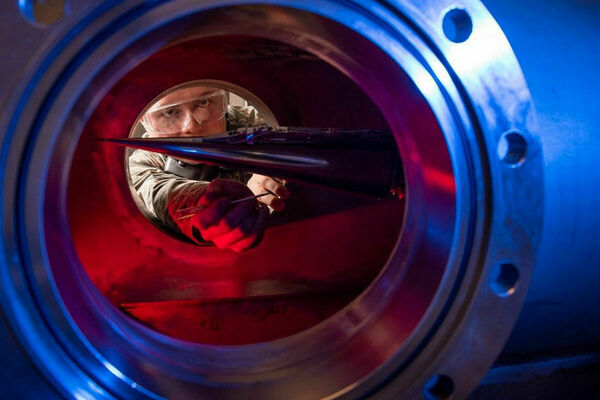
    The Hypersonic Systems Initiative (HSI) represents the culmination of over a century's worth of aerospace research and investment at the University of Notre Dame. Integrating elements of aeronautics with astronautics, HSI is committed to developing hypersonic vehicles that could revolutionize intercontinental transportation. This mission necessitates a multidisciplinary and integrated "system of systems" approach, leveraging the diverse expertise of its affiliated faculty and an array of research centers and facilities across the University, including the Engineering and Design Core Facility, Hessert Laboratory for Aerospace Research, Hypersonic Aerodynamics Lab, and NDTL Propulsion & Power.

    HSI is currently engaged in pioneering research across a range of hypersonic flight challenges, from aerodynamics and thermal protection to propulsion and energy storage. In conjunction with technological advancements, HSI prioritizes the development of a talented workforce, offering robust STEM education in hypersonic systems for students at all educational levels.

    Learn More

    Engineering and Design Core Facility Website

    Hessert Laboratory for Aerospace Research Website

    Hypersonic Aerodynamics Lab Website

  • Preview image for the Vector Biology video

    Vector Biology

    Vector Biology Fact Sheet

    Remote Emerging Disease Intelligence-NETwork Fact Sheet

    Eck Institute for Global Health Website

    Understanding and stopping the spread of vector-borne diseases

    The University of Notre Dame has been dedicated to understanding vector-borne diseases, specifically the factors affecting infection susceptibility and transmission, since 1957. Today, Notre Dame's research continues to evolve through strategic collaborations with organizations such as the CDC, WHO, Unitaid, USAID, MCEVBD, and various health ministries worldwide, Notre Dame leverages an entomological surveillance-planning model to understand disease transmission dynamics and evaluate disease elimination strategies.

    The Eck Institute for Global Health (EIGH) promotes interdisciplinary efforts in research, training, and service to advance health standards and reduce health disparities globally. The University's research also benefits from state-of-the-art facilities like the Genomics and Bioinformatics Core Facility (GBCF) and the Belize Vector and Ecology Center (BVEC), and collaborations with networks such as the Remote Emerging Disease Intelligence-NETwork (REDI-NET), which offers invaluable pathogen intelligence to decision-makers. Notre Dame researchers focus on key areas such as vector surveillance, vector control strategies, antimalarial drug resistance, and vector predictive impacts. The EIGH also offers enriching opportunities for undergraduate and graduate students to actively engage in addressing global health challenges, reinforcing the need for talented healthcare leaders in the fight against vector-borne diseases.

    Understanding and stopping the spread of vector-borne diseases

    Genomics and Bioinformatics Core Facility

    Belize Vector and Ecology Center

    Remote Emerging Disease Intelligence-NETwork

  • Preview image for the Wireless Technologies and Radio Spectrum Access video

    Wireless Technologies and Radio Spectrum Access

    Wireless Fact Sheet

    Wireless Institute Website 

    Fostering a collaborative approach to wireless technology research and radio spectrum access

    The University of Notre Dame stands at the forefront of wireless technology and radio spectrum access research, driving innovation in fields such as broadband access, power-efficient millimeter wave transceiver architectures, and spectrum sharing. Since the late 1800s, these efforts centered within the Wireless Institute of the University’s College of Engineering.

    The Wireless Institute houses several specialized labs and facilities, enabling groundbreaking research like the development of pervasive, persistent spectrum sensors, low-power, high-performance millimeter wave radio architectures, and techniques to limit radiation exposure from mobile devices. Beyond technological advancements, the institute prioritizes workforce development, engaging students in hands-on research and fostering interest in the field. As the lead institution for SpectrumX, a National Science Foundation Spectrum Innovation Center, Notre Dame collaborates with researchers and institutions across the United States, pushing the boundaries of wireless technology and radio spectrum access research.

    Learn More

    SpectrumX Website 

  • Preview image for the Nuclear Physics video

    Nuclear Physics

    Nuclear Physics Fact Sheet

    Institute for Structure and Nuclear Astrophysics Website

    Driving innovation by unraveling the mysteries of matter and energy

    The University of Notre Dame has been a pioneer in nuclear physics research since the 1930s, with significant contributions to the field that include the construction of the first electrostatic particle accelerator and involvement in the Manhattan Project. The research program encompasses the Notre Dame Nuclear Science Laboratory (NSL), part of the Institute for Structure and Nuclear Astrophysics (ISNAP), and the Notre Dame Radiation Laboratory (NDRL). 

    Research areas include experimental programs, nuclear theory, nuclear astrophysics, nuclear structure physics, nuclear applications, fundamental symmetries, and radiation research. Additionally, Notre Dame is part of the International Research Network for Nuclear Astrophysics (IReNA) and collaborates with the Argonne National Laboratory and the Facility of Radioactive Ion Beams (FRIB) at Michigan State University. The University's nuclear physics projects offer graduate students an immersive research experience, while the ISNAP and NDRL engage in outreach and educational initiatives for the wider community.

    Learn More

    Notre Dame Radiation Laboratory Website

  • Preview image for the Power & Propulsion video

    Power & Propulsion

    Power & Propulsion Fact Sheet

    Power & Propulsion Website

    Development Testing and Innovation

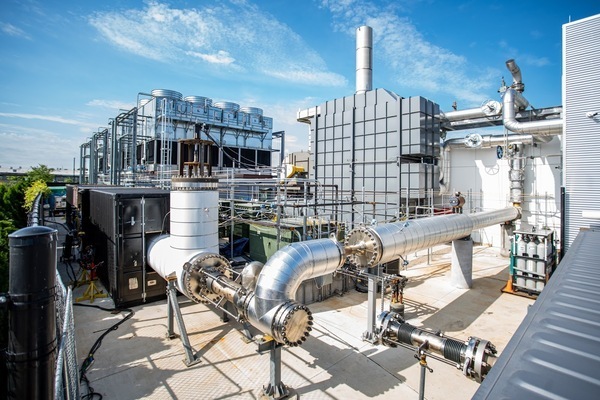
    Since the establishment of the Department of Mechanical Engineering in 1886, the University of Notre Dame has been on the cutting edge of research on propulsion and power, notably in the advancement of aerospace engineering post World War II. As a trusted advisor and collaborator for government and industry partners, Notre Dame continues to spearhead research and development in power and propulsion technologies.

    The University's state-of-the-art facilities, including Notre Dame Power & Propulsion and Hessert Laboratory for Aerospace Research, are pivotal in enabling groundbreaking research in areas such as aerodynamics, combustion, fluid mechanics, and tribology. These facilities, together with the Institute for Flow Physics and Control (FlowPAC), offer unique capabilities for testing gas turbine engines and other propulsion systems. Engaging in productive partnerships with industry and government collaborators, Notre Dame contributes to innovations in energy generation, thermal management, and energy storage solutions. Committed to workforce development, the University's doctoral program in Aerospace and Mechanical Engineering and ND P&P's internship program prepares the next generation of leaders in propulsion and power, providing experiential learning in an innovative environment.

    Learn More

    Hessert Laboratory for Aerospace Research Website

    Flow Physics and Control Website

  • Preview image for the Urban Resilience video

    Urban Resilience

    Digital Twin Cities Fact Sheet

    DHARMA Lab Website

    Helping countries and cities counter the risks of a changing climate

    Notre Dame has long been a place that is committed to sustainability and the fight against climate change - and these commitments translate into the University's research mission.

    Specifically within urban communities, Notre Dame researchers are working hard to create new solutions to combat global warming, such as through a new type of model called a digital twin city. Digital twin cities help urban planners by offering a virtual environment to experiment with different solutions to a city’s complex problems. Notre Dame researchers are moving beyond existing digital twin models to include climate-related concerns.

    Learn More

    Notre Dame Global Adaptation Initiative

  • Preview image for the Driving Evidence-based Health and Policy Decisions video

    Driving Evidence-based Health and Policy Decisions

    Wilson-Sheehan Lab for Economic Opportunities Website

    Driving Evidence-based Health and Policy Decisions

    William Evans, Notre Dame’s Keough-Hesburgh Professor, and Ethan Lieber, the Gilbert F. Schaefer Associate Professor, have with their colleagues established that the 1996 introduction and advertising of OxyContin by Purdue Pharma was a leading cause of the crisis by demonstrating that states where OxyContin was advertised more have substantially higher drug mortality in the 21st century. Related work demonstrates that the 2010 reformulation of OxyContin further fueled the opioid epidemic by leading many users of the drug to switch to a more dangerous alternative: heroin. Their current work examines how some physicians’ more aggressive prescribing of opioids since the late 1990s has contributed to the crisis. Evans is the co-founder of Notre Dame’s Wilson Sheehan Lab for Economic Opportunities (LEO), and it has worked to understand the best ways to help people struggling with addiction successfully recover. Their current projects assess the effectiveness of recovery housing after drug treatment, how permanent supportive housing assists reintegration after prison for those with histories of drug and alcohol abuse, and whether incentives can improve persistence with drug treatment.

    LEO also works to make data and findings readily available to researchers, policymakers, and health workers. In partnership with Notre Dame’s Lucy Family Institute for Data & Society, LEO launched a user-friendly online platform that allows website visitors easy access to the Automation of Reports and Consolidated Orders System (ARCOS), a nationwide system through which manufacturers and distributors report transactions of controlled substances to the Drug Enforcement Administration (DEA).

    Learn More

    Lucy Family Institute for Data and Society Website

    ARCOS Website

  • Preview image for the Testing for Illicit Substances in the Field video

    Testing for Illicit Substances in the Field

    PAD Project Website

    Testing for Illicit Substances in the Field

    Opioid overdoses are typically unintentional and treatable. The CDC reports that in 2022, 64.7% of drug overdose deaths had at least one potential opportunity for intervention—for example, by administering naloxone (Narcan). However, to avoid unintentional overdoses and provide the appropriate type of intervention during an overdose, it is necessary to know whether high-potency drugs are present and if so, which kinds.

    The Paper Analytical Device project is helping by bringing high-quality chemical analysis out of the lab and into the world. The project, led by professor of chemistry and biochemistry Marya Lieberman, develops Paper Analytical Devices (PADs). A PAD is a test card that can rapidly determine the major components of solid drug samples and, when coupled with immunoassay test strips, identify dangerous drugs like fentanyl, benzodiazepines, xylazine, and nitazenes. Since PADs do not require electricity and can be deployed in large numbers at low cost, they are suitable for low-resource settings. 

    After use, the PAD can be sent to a lab for further analysis. Over 77 controlled substances, drug precursors, degradation products, and cutting agents can be extracted from the used PAD. The results from samples of street drugs will complement the data about prescription opioids available through ARCOS, giving public health officials a better picture of the composition of the drugs in use in their communities.

    The Lieberman lab is a nationally recognized leader in the use of fentanyl test strips for drug-checking applications and has identified conditions that can cause false positive results or “blind spots” for the detection of fentanyl analogs. The lab leads an effort to monitor the effectiveness of different brands of test strips that are sold for drug-checking purposes everywhere from online retailers to the “dark web.”

    Learn More

    PAD Project Storefront Website

  • Preview image for the Stemming the Tide of Illicit Drugs video

    Stemming the Tide of Illicit Drugs

    YES Lab Website

    Stemming the Tide of Illicit Drugs

    A significant driver of the opioid epidemic is the way drug traffickers use the internet as a direct-to-consumer sales and marketing medium. Notre Dame researchers are working to end this practice. A lab directed by Fanny Ye, Collegiate Associate Professor of Computer Science and Engineering and Associate Director of Applied Analytics in the Lucy Family Institute for Data & Society, is developing an artificial intelligence (AI)-augmented framework to detect, disrupt, and dismantle online opioid trafficking networks.

    Ye and her colleagues analyze both text and images to identify illicit drug traffickers in darknet markets and on popular social media platforms. Their work delivers forensic evidence against online sellers. By collecting this evidence, Ye and her team aim to disrupt networks of opioid trafficking and thereby destroy online opioid supply chains. In addition, Ye and her team have developed new machine-learning models for the early detection of risky drug-drug interaction patterns with the aim of saving lives by reducing the risk of opioid overdoses. They are currently building a novel AI-driven paradigm to provide effective yet affordable personalized dietary nutrition interventions against opioid misuse and addiction.

    Learn More

    Fighting For Video and Story Website

Sign up for our newsletter

Ready to learn more and stay engaged with the University of Notre Dame? Sign up below for our quarterly research newsletter. 

Read the latest Subscribe now